

JP Enterprises Founded
After 13 years owning and operating Lloyd's Sportshop in Minneapolis, Minnesota, John Paul launches JP Enterprises, Inc. The company begins as a mailorder resaler of firearms components and home security systems.
JP Enterprises
By entering this website, you certify that you are 18 years of age or older.
Like you, I'm an avid recreational and competitive shooter. The American tradition is an endangered culture now, but that's how my father taught me and how I've taught my sons to ride, shoot straight and speak the truth.
My first gun was the requisite Daisy Red Ryder with one of my mother's old belts as a sling. I've long since worn it out but I still have it. I guess some people just never grow up. Now I've been shooting in competitions of one sort or another for nearly 40 years and my products and services are the direct result of that experience. I'm sure you've seen all sorts of firearms products that do not perform as expected, primarily because many are designed by people who are desk jockeys, not real shooters. I put on thousands of miles every year traveling to national level competitions, actually putting our products to the test. I am constantly trying to improve our existing products and services and create innovative new ideas to fill the needs of serious and recreational shooters.
I also have a rather old fashioned idea about "customer satisfaction." You'll notice that we don't have any fancy fine print guarantees with our products. My policy is simple: if you're not happy, I'm not happy. I only guarantee one thing, your satisfaction. Ask one of our customers. They're our best salespeople.
Good Shooting!
John Paul
President
JP Enterprises, Inc.
Thanks for all your support from the crew at JP!
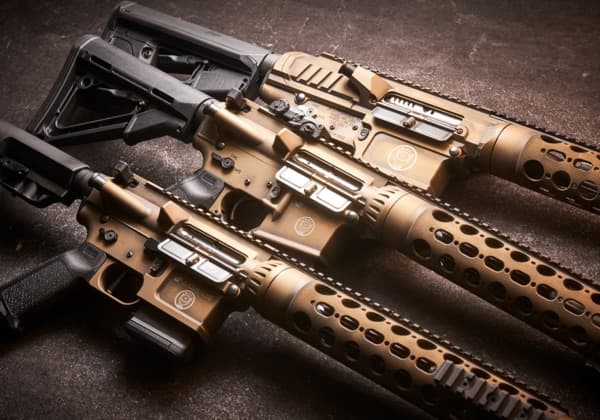
For more than three decades, JP Enterprises has set the pace for the modern precision AR. From the original Recoil Eliminator and the first truly refined AR trigger to the adjustable gas system, air-gauged Supermatch™ barrels and the roller-delayed JP-5™, our milestones read like a history of the platform itself — each one designed, tested and proven on the firing line by shooters who compete at the highest levels.
After 13 years owning and operating Lloyd's Sportshop in Minneapolis, Minnesota, John Paul launches JP Enterprises, Inc. The company begins as a mailorder resaler of firearms components and home security systems.
The first JP original, the Recoil Eliminator debuts, becoming the most effective muzzle brake design for small arms. So effective was it that USPSA would ban the Recoil Eliminator in all but Open division.
The original JP Fire Control kit brings refinement and adjustability to the AR trigger group. The days of the Mil-spec trigger were numbered.
After a quality compensator, regulating bolt velocity was the next advancement towards a smoother shooting rifle. The Adjustable Gas System allowed tuning of the operating system to match the rifle's configuration and ammunition.
An natural spinoff from our gas blocks, JP sight blocks helped maximize sight radius on precision builds.
The first custom-built JP rifles hit the market. Beyond the JP original components, the receivers, hand guards and barrels in these first rifles came mostly from nearby DPMS.
Prioneering the all-out competition AR, JP releases its first high-performance aluminum bolt carriers.
An eye for aesthetics and craftsmanship drive the development of the JP laminted wood stock. It would remain a signature JP part for the next decade.
This modifiend combination of stock and grip pushed the defintion of "thumbhole stock." In the era of the 1994 Crime Bill, it skated a fine line.
Like so many of our designs, this cleaning rod design arose from a lack of quality alternatives. We knew we could make it better, so we did. We also happened to hit upon one of our best-selling parts over the years.
Made for several models, these comps brought the advantages of the Recoil Eliminator to 1911 pistols.
Built on the signature Barricuda wood stock, this 10/22 featured a refined 3 lb. trigger and cryo-treated barrel. Several precision small bore configurations would fill out the JP 10/22 lineup.
Paired with our rail-mounted detachable level, these sights topped the market for the best precision iron sights for years.
Intra-Comp forecast our JPTRE series of compensators by several years. Our machinists individually cut compensator features into each barrel for a premium upcharge.
Slotting the right angles of post-and-notch sights is not as organic as aligning circles over a visible target. Offered for numerous sight cuts, the Doublring concept came from multiple iterations on John Paul’s own IPSC pistols.
The perfect companion to the JP trigger, this AR hammer redesign was faster and lighter than Mil-spec triggers. The result was improved ignition reliability and accuracy.
Like the Mil-spec AR, John Paul saw potential in the ugly duckling of the pistol world. Our flared mag. well, extended magazine button and trigger upgrade service transformed many GLOCKs into competition-ready pistols.
The cure for clacking receivers, the JP Tension Pin was the engineered alternative to the ubiquitous rubber wedge. Pulling even the sloppiest receivers together, this drop-in part opened up the accuracy potential for thousands of ARs.
The contact between hand guard and barrel in the original Stoner design would always handicap its accuracy. Our original free float design opened that potential back up. The fluted design of these first hand guards has been a JP signature for over two decades.
The first JP original, the EDGE receivers featured an original billet receiver/hand guard set thanks to machinist, Lloyd Demantis. Featuring all our proprietary components, our Grade III rifle was the top-of-the-line JP for years. Our Grade II featured the same billet upper and hand guard, but on a Mil-spec lower. Wild colors, wood stock plus all the JP bells and whistles—ARs had come a long way.
It all started with a fussy single-stack .45 that wouldn’t work with John Paul’s extended mags. This little add-on resolved the feeding problems to get many 1911s up and running reliably.
After years of sourcing from other manufacturers, our line of Supermatch™ barrels finally gave us the profiles and quality we were after. These cryogenically treated barrels were the last puzzle piece to the unsurpassed quality of the JP rifle.
In its early years, JP was more of a generalist firearm company than we are today. This handy tool made quick work of stripping full moon clips and doubled as a .45 ACP case gauge.
Developed in parallel with our Supermatch™ barrel contours, the original heat sink design would change shape significantly over the years. Highly effective at increasing barrel life, it also offered a JP signature splash of color under the hand guard.
The same welder responsible for our Recoil Eliminators welded up this drop-in slide stop replacement. Just having the exposed flat to pinch cut a 1911’s muzzle flip dramatically.
A high-grade rifle needs quality ammo like a sports car needs premium gas. Out-of-spec ammo was unacceptable. As a long-time reloader, John Paul came up our first case gauge, cut with a match chamber finish reamer.
As 3-Gun became the sport that shaped our competition rifles, upgrading shotguns naturally followed. Our customized Remington 1187 packages included multiple third-party upgrades plus our new shotgun Recoil Eliminator.
Moving up in the world, John Paul and family purchased a new house, and JP upgraded from basement to barn. With horsestalls for inventory and a hayloft for offices, the business would spend most of the next decade in the barn, growing to over a dozen employees.
Expanding the successful line of fire control components, our JP Anti-Walk Pins debuted along with our complete fire control package. Originally moly-coated long with John Paul's bullets at the time, these pins knocked the wobble out of any AR trigger group.
Co-developed with top shooter and trainer Bennie Cooley, our "Tactical Compensator" design originated in response to the new 1-by-3 rule of Tactical division. This rule came specifically to knock out our Recoil Eliminator for being too effective. Incredibly effective and streamlined, the TRE series compensators quickly became our most popular muzzle option.
Preparing for new things, we rebranded our Mil-spec receiver set rifle, the Grade I. While not as flashy as the all-billet guns, the JP-15 has remained our best-selling model with no compromise in performance.
Debuting on the brand new www.jprifles.com website, "art in metal" was the tagline for our new, and soon to be iconic, billet receiver set. The CTR-02 was a streamlined, machined-from-billet design geared for the competition shooter, and is still shot by many today.
The spiritual successor to the original Soldier of Fortune 3-Gun World Championship, the Rocky Mountain 3-Gun became JP's premier competition. Held at the NRA Whittington Center, the RM3G has the reputation as the most amazing natural terrain match on the national 3-Gun circuit.
For those whose budget couldn't accomodate the full JP fire control package, we've always offered "The Poor Man's Trigger Job." Commisioning our now iconic yellow springs made a a crisp, reliable trigger to anyone with $10 to spare.
While modifying a Harris bipod to mount to one of our hand guards, we suddenly had the bright idea to stick backer plates and rails into the tube's previously cosmetic slots. The concept of the modular hand guard was born and we were soon in the rail business.
The first offset iron sight system available, the Short Range Tactical Sight became a popular competition accessory. Supplmenting a long-range optic, the SRTS provided fast, reflexive engagement at short range and paved the way for modern 45° offset sight systems.
Like many of our products, our Tactical Operating System (TOS) carrier was Mil-spec but better. Manufactured from superior 416 stainless steel, we increased the bearing surfaces in our design and then roller burnished and hand polished every carrier for smoother cycling.
While we dabbled with the original Tasco-Optima mini sights, we always felt the manufacturing never lived up to the design's potential. When Tasco went under, a little UK startup that would become Shield PSD bought up the rights, and after some negotionations, JP now had the mini sight we'd hoped for with superior production quality and great versatility: the JPoint.
Our last great innovation for Glock pistols, our extended mag. release became a must for competition Glocks and plenty popular with law enforcement as well. No more shifting of the hand for reloads was a game changer.
Bringing the JPoint MRD together with the popular ACOG, our piggyback mounting system was a popular combination. Thousands of JPoints saw use by servicemen in Iraq and Afghanistan, and this combo transitioned well into the 3-Gun world.
One of the first of its kind, the JP modular trigger captured all the advantages of our best-selling fire control package in a drop-in unit. It's a concept that would have many imitators in the years to come.
An adjustable selector was the missing piece of the JP fire control system, and it's what made our modular trigger work so well. Along with the adjustments in our trigger itself, this selector allowed for a premium trigger job in nearly any receiver.
After pulling weight out of the bolt for our LMOS™, we looked to the buffer assembly. When paired, these new carriers and buffers made for a softer shooting rifle with lower recoil impulse. It wasn't long before we had to stop disassembling other buffers and make parts of our own to meet demand.
Between our competition aluminum carrier and our duty-ready steel carrier, there was room for something new. After experimenting with turning down a Mil-spec carrier, we found the perfect profile for softer, lighter shooting without compromising durability in our new Low Mass Operating System carriers.
While the original JP hand guards were an inherited design, the new VTAC Modular Hand Guard (designed in tandem with Kyle Lamb) was a JP original. These tubes were designed to be modular from the ground up with a more secure attachment method and many small improvements over their predecessor.
Education has always been important, but John Paul struggled for years trying to find a way to communicate dry concepts to our customers. Enter GasGunBasics, a humorous primer on everything an AR should know about his rifle. This DVD came standard with every JP rifle for over a decade and, while dated, is still a great resource that you can view here.
After years in working with mounts and rings from other companies, it was time we had our own optics mounts. JP Flattop Scope Mounts were not just a rock-solid mounting platform. They were a modular system that allowed further use of the JPoint as a piggyback optic.
The development of our large-frame platforms began much as it did with our AR-15-type rifles. Starting with DPMS LR-308 receiver sets, we brought in all the JP bells and whistles for a premium AR-10 package like none other on the market.
Our most ambitious new rifle project yet, the large-frame LRP-07 would be the first of our side-charging rifle platforms. This innovative, non-reciproacting design allowed better leverage while charging an no need to dismount to do so.
The Manually Operated Rifle (MOR-07) was the other new long-range addition to the rifle lineup this year. Inspired by John Paul's first outing at the ITRC, this new platform first incorporated what would become the Advanced Modular Chassis System (AMCS).
Designed specifically for the new LRP-07, our large-frame LMOS carriers faster, softer cycling to our new large-frame side-charger. Plus, a slight modification to our full mass bolt carrier also made a full-auto version available this year. Both utilized the new rock-hard, lubricious QPQ coating that's been our standard ever since.
Another fruitful middle ground product, these large-profile compensators managed nearly the same recoil reduction as our classic Recoil Eliminator with a more traditional profile that many shooters preferred.
If we'd known that making a better AR was such a bottomless rabbit hole, who knows if we ever would have started? Having a run-of-the-mill Mil-spec bolt assembly in a top-end rifle like ours wouldn't do Designing and manufacturing our own bolt assemblies was one of the trickiest engineering tasks we'd ever faced but also one of the most worthwhile.
In a time when traditional-style bolt gun chassis still dominated the market, introducing AR-style ergonomics into a manual rifle was a major game changer. The Advanced Modular Chassis System made our MOR-07 and later MR-10 rifles what they were, incorporating a palm-shelf pistol grip and Magpul PRS stock.
While the JP barn had served us well for almost a decade, space was becoming a premium as our employees quadrupled in that time and our product line exploded as well. We renovated the current JP offices in 2009 and needed purchase the matching building next door just a few years later just to keep up.
No sooner is one problem solved than we discover a new one we never recognized before. So it was with the ugly rasping sound of standard buffer springs. We chased vendors for better products and polished hundreds of springs by hand before finally commissioning our own custom ground springs, which drastically cut down on cycling noise.
After testing out new designs and manufacturers over the years, we finally debuted our signature silver bolt assembly, the JP EnhancedBolt™. Manufactured from SAE 9310 alloy steel, this bolt assembly was superior to the Mil-spec in every way. The innovation never ceased, and to this day, we’re still rolling out enhanced JP-SPEC bolt subcomponents and trying out new and better coatings.
After retiring our modular trigger, we still saw a market for a precision aftermarket trigger that didn’t require gunsmith expertise. The debut of our EZ Trigger Kit offered the complete suite of JP Fire Control components in one package. Unlike before, this new package could produce a JP-quality trigger in under 30 minutes with no parts modification required.
An evolution of our MOR-07 bolt gun, the new MR-10 featured several tweaks to the chassis itself and the use of a new, high-end 3-lug short throw bolt action. Several incremental improvement would find their way into the MR-10 before its retirement in 2018.
Always listen to the customer. After attending many law enforcement shows and talking to LEOs who shoot, we heard one concern over and over. Officers with personally owned carbines were afraid to buy a quality patrol rifle for fear of losing it to evidence impound. By offering free loaner rifles for as long as needed, our We’ve Got Your Back Program has been well received by law enforcement.
Originally available only in our LRP-07 rifle platform, our JPBC-4 LMOS™ bolt carriers proved another popular addition to our large-frame component lineup. These carriers, available in black and polished stainless, offered softer cycling and faster sight recovery just like their small-frame counterparts with 100% duty-capable reliability.
2011 was a big year for us with two new JP rifles. With the popularity of the LRP-07 side-charger, the obvious next step was a small-frame version: the SCR-11. Designed primarily for the competition crowd, this dedicated side-charge billet design also became a popular hunting platform.
Our second big rifle release for 2011, the PSC-11 took the JP side-charge system and combined it with a standard top-charge in one receiver. This system redundancy offered duty operators with a choice of charging systems. Available as a complete upper, the PSC-11 upper design was also compatible with any Mil-Spec lower for a cost-conscious upgrade.
After twenty years in business, we’d seen plenty of other companies come and go. Of those that stuck around, many like Magpul did a great job of branding. Departing from our trust old logo, we knew we needed something slick and iconic. After dozens and dozens of designs, we finally settled on the JP logo that’s carried us into the 21st century.
The great versatility of the AR platform proved itself again with the 9mm conversion kits available from Rock River. For a while, we offered complete JP rifle builds based on these components. All the while, we saw the potential for this kind of product. We quickly set to work on a ground-up 9mm carbine design.
The natural extension of our PSC-11 small-frame dual charger, the PSC-12 offered the same redundant side-charge functionality on any DPMS-style .308 lower. An Armalite version was soon to follow. This receiver design became a popular choice for top-of-the-line competition builds for the emerging discipline of precision rifle.
If someone knows JP for just one thing, it’s probably the Silent Captured Spring. First envisioned half a decade earlier, its debut at SHOT Show 2012 made it by far our biggest runaway success. Now, the SCS has become an indispensable AR upgrade for many. This drop-in spring almost entirely eliminated buffer tube noise and friction for a more pleasurable shooting experience.
The JP hand guard design has always been one of the most recognizable features of our rifles. After so many years, we decided to try something new with an easier interface and a lighter weight. Originally marketed as our LE-M (Law Enforcement-Military) hand guard, the Rapid Configuration moniker for this tube that allowed direct-mounting of accessories to the tube.
It was hard to believe ten years had passed since the debut of our signature billet design, the CTR-02. To celebrate, we worked up a special commemorative edition of just ten rifles. Each included custom faded anodizing, special lasermarking and a commemorative emblem machined into the side. We fielded requests for these rifles for years after the last was sold.
As the 2010s got under way, John Paul shifted interest from 3-Gun to the new precision rifle discipline. His critical eye for improving our rifles followed. The Magpul PRS stock was the benchmark for this sport but lacked the full adjustability necessary. Our add-on buttpad remedied this oversight to allow full fine-tuning of the PRS’s fit to the shooter.
After a short-lived GMR-12 model, we nailed the design and manufacturer for our new Glock-magazine 9mm carbine receiver. Coupled with our redesigned 9mm bolt assembly and dedicated Silent Captured Spring, we struck upon the most reliable blowback 9mm carbine on the market. Originally aimed at law enforcement, the new PCC discipline would make us the benchmark of a whole new shooting sport.
The new extended version of our scope mount design came as a response to the development of many popular new scopes. These 1-4x, 1-6x and 1-8x scope featured more generous eye relief that standard mounts couldn’t manage without bridging between receiver and hand guard. This was a cumbersome solution, so we were happy to offer a proper one.
With precision rifle popularizing new calibers for the AR platform, it became obvious that the standard AR-10 design wasn’t quite up to the task. To accommodate these new high pressure calibers like .260 Remington and 6.5 Creedmoor, we designed a new high pressure version of our .308 EnhancedBolt. This eliminated primer flow and pierced primers entirely, becoming the standard bolt on all large-frame JP builds.
After shooting several of the Competition Dynamics precision matches there, John Paul fell in love with this little patch of New Mexico desert. A real shooter’s paradise, JP was quick to snatch it up when the current owner was ready to move on. The JP Blue Steel Ranch continues to serve as a premier site for competitions, training and now hosts our own JP Precision Rifle courses.
Fanboys of their tactical wear for years, we were flattered by a request from 5.11 to collaborate on a special series of rifles. The Always Be Ready Edition (ABR) included special configurations of the JP-15, SCR-11 and LRP-07 in 5.11’s new Storm Gray color. We topped this off with a signature orange JP Thermal Dissipator and special lasermark.
The brainchild of Armageddon Gear’s Tom Fuller, the Revolution trigger lived up to its name. This unorthodox trigger design features a free-spinning roller that helps normalize finger placement to eliminate pulled shots. Available in our component kits and as a rifle option, the “roller trigger” has become a popular (if polarizing) JP standard.
After years of selling .22 LR conversion kits, we decided it was finally time to offer a proper rimfire JP. The JP-22R utilized a premium JP Supermatch™ barrel and bolt for the finest rifle of its kind. Whether for recreation or as a practice tool, there was nothing to match the overall component and build quality of our .22.
After the 20th Anniversary CTR-02 was so well received, we had a mind to try out more limited edition rifles. The Billet Beauty LRP-07 was inspired by B-17 Liberty Belle and the unmistakable look of late-WWII U.S. aircraft. This limited 25-piece run of rifles featured a detailed paint job, decals and metal plates with specially commissioned artwork of the Billet Beauty herself.
Our second special edition rifle for 2015, the Engraved Edition CTR-02 was the collaboration between John Paul and renowned engraver, Brian Powley. Our Presentation Grade Finish had been the top-of-the-line finish on our rifles for over a decade. Enter the Engraved Edition to up the ante further with intricate hand engraving.
When we branched out our hand guard line with the Rapid Configuration line, we learned many lessons about how to make a sturdier attachment. It was time to roll all our hand guards into one premium system, the MK III. Identical nuts with interchangeable tubes, this system was completely interchangeable with unmatched rigidity. We also introduced a rugged texture to the new Rapid Configuration tubes that catapulted them to popularity.
While many people think of us as a rifle company, the components are where we truly excel. For the home builder, we introduced the Semi-Auto Chassis System to bring our stripped receivers to the market for the first time. Couple with our new MK III Hand Guard System, the SACS was the first “semi-monolithic” AR chassis with all the rigidity and reliability of a monolithic system.
After several years in retirement, 2015 saw the popular return of our all-aluminum bolt carrier to the competition market. The new JPBC-1 incorporated all the new carrier design tweaks from over the years while weighing in lighter than titanium. Its clear hardcoat finish was immediately distinctive and unmistakable in our new ultralight rifles.
Sometimes, an idea needs to find its time. While we ran with the “pencil barrel” concept back in the early 2000s, it never found a market. But, in a world where shaving ounces was priority #1, the time for ultralight barrels had come. Our ultralight configuration also included our JPBC-1 aluminum bolt carrier and the Mission First Tactical BATTLELINK™ stock. The final weigh-in was a mere 5.6 lbs.
While our LMOS™ bolt carriers for the large-frame platform worked equally well for duty or competition, the market had its own demands. Heavier than even a standard .308 carrier, the new JPBC-5 FMOS™ offered much needed mass regulation to those rifles without an adjustable gas system.
There was nothing pressuring a total redesign of the Silent Captured Spring except that we knew we could make it better. That’s all it takes at JP. Almost every component of the system received tweaks and improvements in this overhaul. The result was superior look and feel with better functionality especially for the large-frame models.
Author of the best-selling Monster Hunter book series (among others), Larry Correia is a writer any gun guy could enjoy. We took a chance reaching out to him for a collaboration and ended up with a fantastic special edition rifle. The Cazador LRP-07 was our first distressed paint job and made for a very unique looking rifle. It saw use in Larry’s Monster Hunter: Siege and later books as part of series canon. We also invited Larry down to the JP Blue Steel Ranch for a precision rifle class with is own personal Cazador.
Following the success of our .223 ultralight barrels, we got it into our heads to try out the concept on a .308 as well. The result was a large-frame rifle weighing in at 7.4 lbs., which was lighter than many .223s out there. A great hunting platform, it was also appealing for 3-Gunners in the heavy divisions, like our own Dustin Sanchez.
One of the biggest innovations in bolt carrier design, the VMOS™ offered not only tunability for mass regulation but also additional reciprocating mass. When paired with a Silent Captured Spring, the VMOS offered amazing flexibility and proved a huge benefit for suppressed rifles in particular.
As the popularity of Pistol Caliber Carbine (PCC) was on the rise, the GMR-15™ Glock magazine lower hit the stage at just the right time. An improved version of out GMR-13™ design with last-round lockback, the GMR-15™ would become the most popular choice of PCC shooters in USPSA for serveral years running.
Engineered alongside the new GMR-15™ lower, the PSC-17™ dual-charge upper assembly retained the functionality of the PSC-11™ with stylish new light-weight design. The smaller ejection port of this model made it the premium option for our 9mm and .22LR builds while setting the design cues for several future receivers.
One of John Paul's personal projects, the Benchrest Forearm Adapter was born of one simple fact that a round hand guard is not a stable brace. This wide sled offered a sturdy platform for sturdy benchrest or barricade bracing. John Paul never even bothered with a bipod during the first precision match he used it for.
What started as a begruding redesign of our classic Bennie Cooley comp, the new three-port Competition Series quickly took off becoming the new iconic JP look. These comps were thoroughly engineered and meticulously tweaked to provide the maximum in recoil reduction package that the 1x3 rule would allow.
With the adjustable gas block becoming a staple of the AR platform, a more user-friendly version had long been in the cards. The click-adjustable version of our gas systems were the natural solution, providing a more refined interface with more repeatable settings.
Since the development of our original JP Tension Pin, the problem of poor receiver fit was obvious. This eventually paved the way for our Microfit™ Takedown Pins--precision ground takedown pins in various size to match to any receiver set. They offered tight lockup with simple access.
At long last, the JP Modular Trigger made its return this year with a vastly improved design. The new JPFC-M offered a crisp, clean break nearly on par with JP component trigger components installed by our own techs. This new design was also the first trial of our interchangeable trigger shoe design.
The more years JP spends refining the AR platform, the more places we find for improvement. 2018 marked the release of our enhanced JP-SPEC designs for extractors, ejectors, cam pins, firing pins and retaining pins.
Designed with input from lead instructor at the JP Blue Steel Ranch, Brian Whalen, the new APAC™ was a massive leap forward in precision chassis design. This Remington 700 compatible platform was lightweight, fully ambidextrous and adjustable and incorporated a MK III Hand Guard with integral Acra-Swiss.
The obvious outgrowth of our new APAC™ chassis, the MR-19™ complete rifle represented a collaboration between several of the premier brands in the precision rifle space. A custom contour PROOF Research barrel and the Ultimatum Precision Deadline action round out his premium manual rifle package.
Taking design cues from the PSC-17™ upper receiver design, the new PSC-19™ large-frame dual-charge was lighter weight and more stylish than its predecessor the PSC-12™.
The LTC-19™ large-frame top-charge upper filled in the last gap in our receiver lineup. This light-weight receiver option was available as a complete rifle or upper assembly compatible with any standard DPMS-style .308 lower.
While our 9mm platform was a hit in PCC division and Steel Challenge, many of our shooters were hungry for weight savings. This innovative barrel design was based off a 5.5" steel barrel welded to a hollow aluminum shroud saving 10 oz. of weight versus a comparable steel barrel. Just what the doctor ordered.

Get the latest product releases, exclusive offers, and industry insights. Sign up today and be the first to know about new firearms, parts, and accessories that meet your specific needs.
By subscribing, you agree to receive exclusive content, special offers, and the latest news from JP Enterprises.